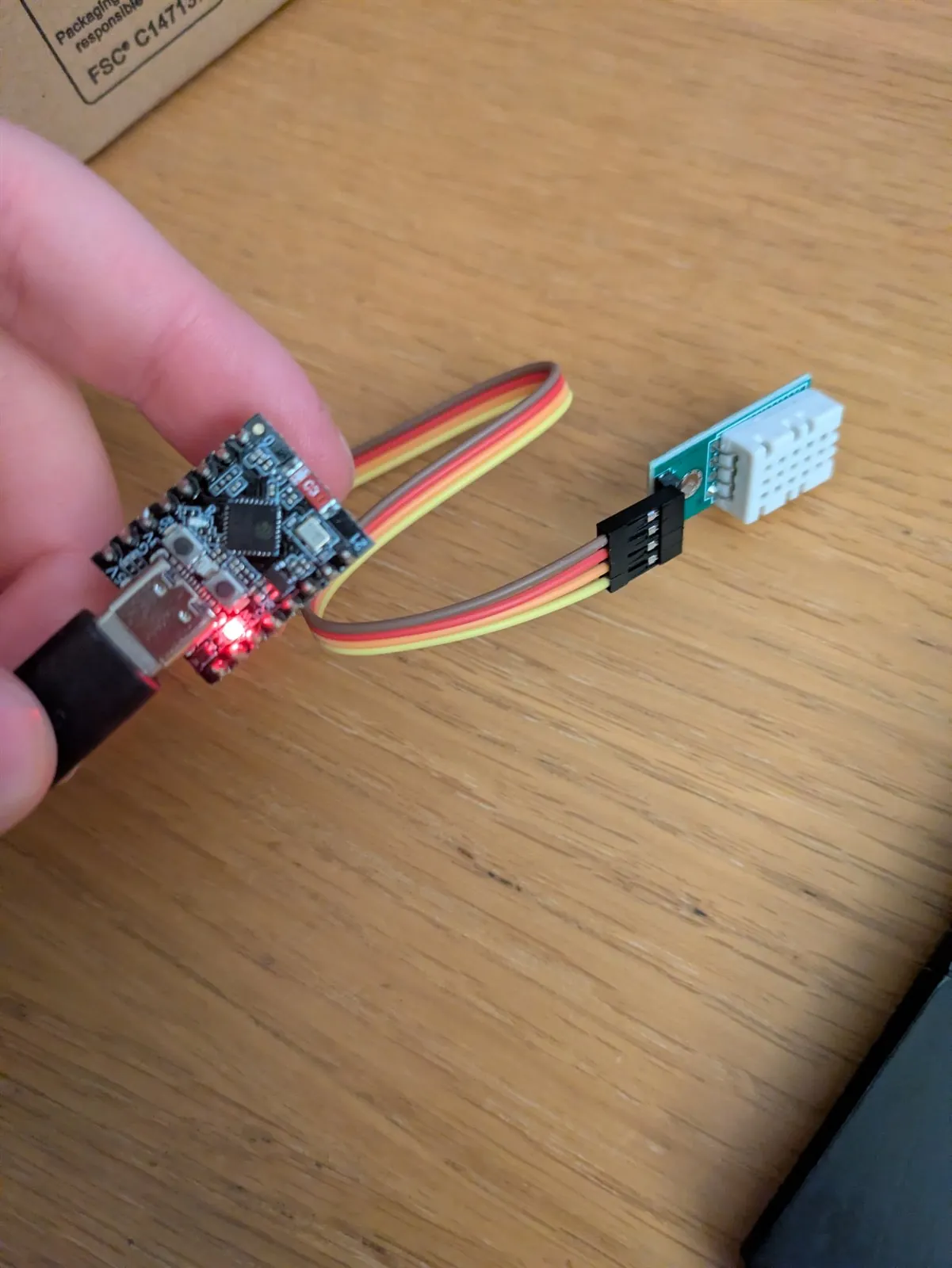
01 / Loose wires
A sensor on the end of a cable
The first version was an ESP32-C3 and a temperature / humidity sensor joined by jumper leads. Small enough to get a reading, with everything still out in the open.
1 / 5Hardware + software · ongoing
Homemade CO₂, temperature and humidity sensors report through AWS IoT Core to a room-by-room dashboard of the house. A Bluetooth bridge sets an electric radiator, and a change only shows as applied once the radiator confirms it.
Notes updated
The 3D view needs WebGL, which this browser could not start. The enclosure studies page shows the same model as drawing sheets.
Drag to explore · scroll after clicking to zoom · dimensions reconstructed from photos
See the full enclosure studiesMTS-3 · the air-sensor build
01 / Loose wires
The first version was an ESP32-C3 and a temperature / humidity sensor joined by jumper leads. Small enough to get a reading, with everything still out in the open.
1 / 5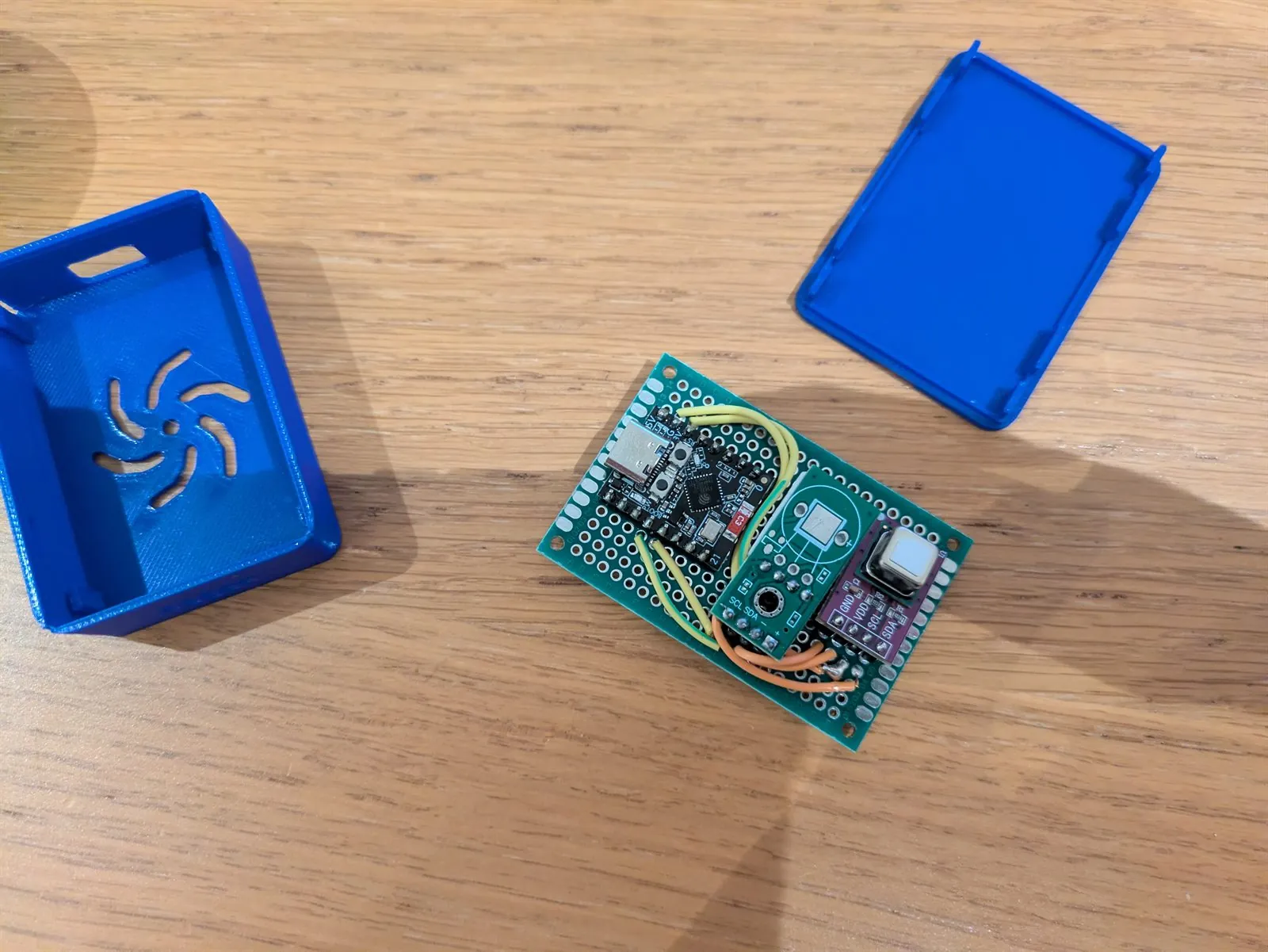
02 / One board
The controller, CO₂ sensor and temperature / humidity board came together on a soldered carrier. The blue printed shell was the first case.
2 / 5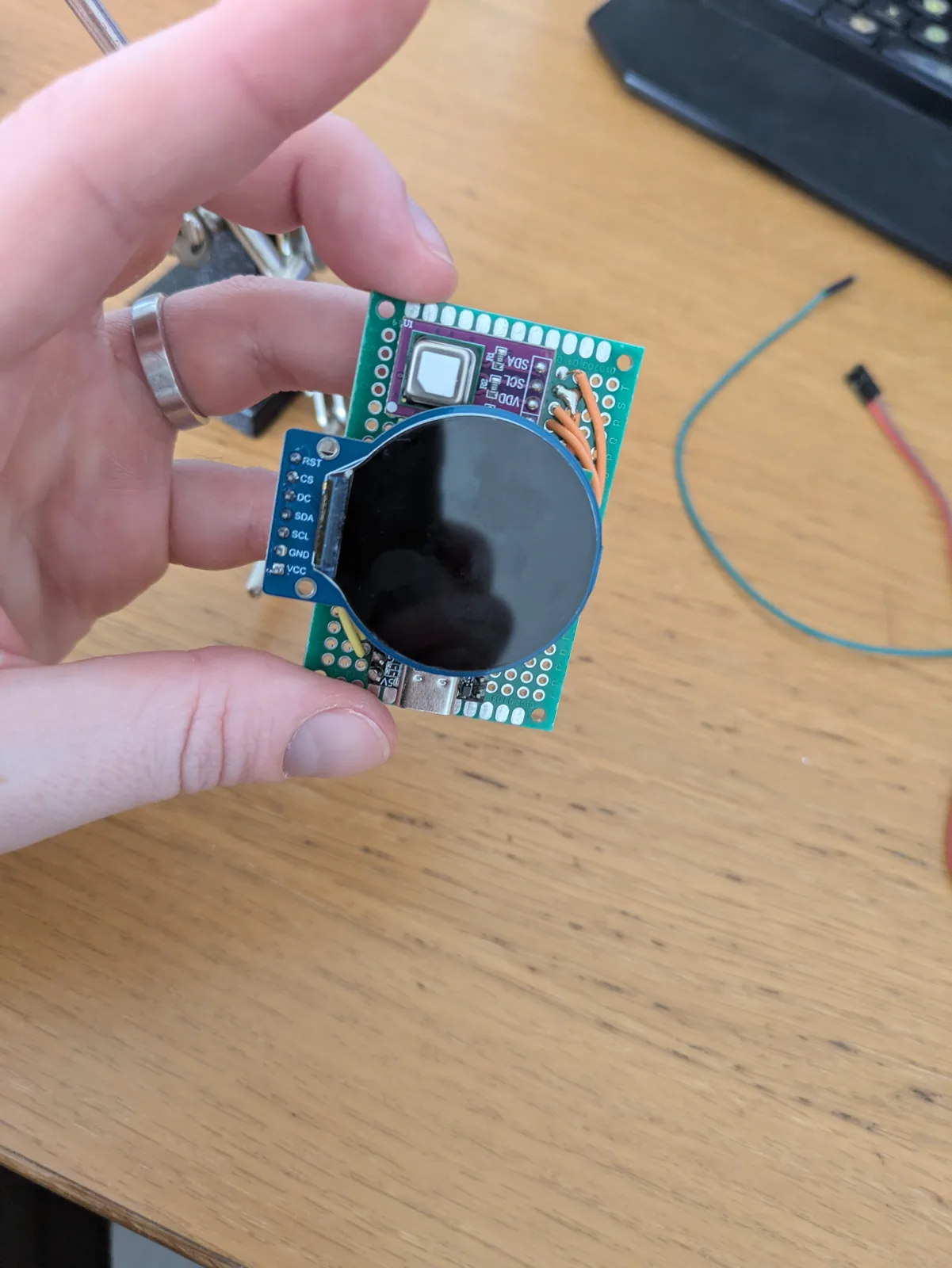
03 / Round display
The round screen sits above the electronics. Headers, short jumpers and the display tab make the stack much tighter than the first wired prototype.
3 / 5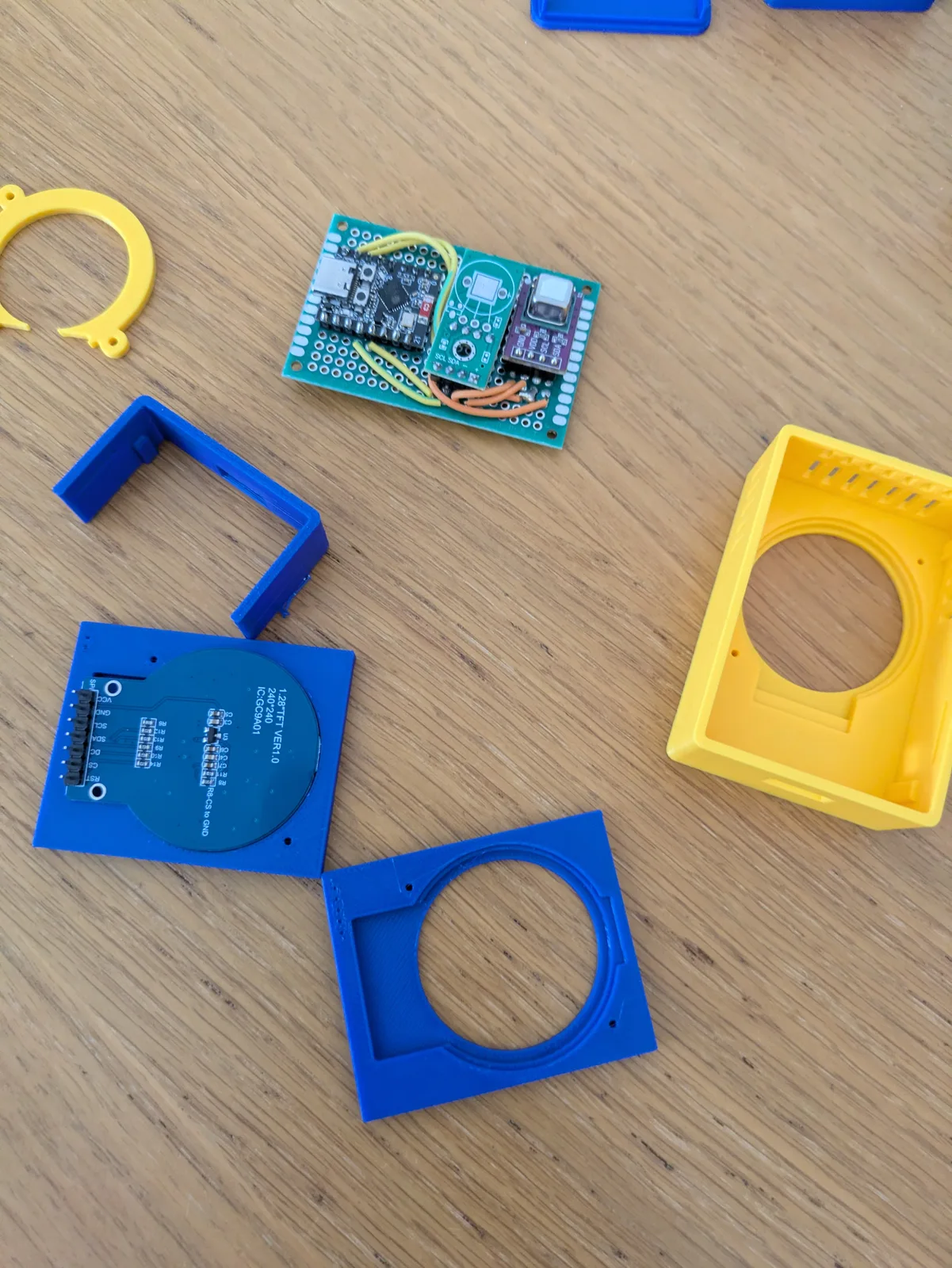
04 / Print & fit
Different lids, display seats and case walls were printed and tried against the real board. These blue and yellow parts show the fit changing along the way.
4 / 5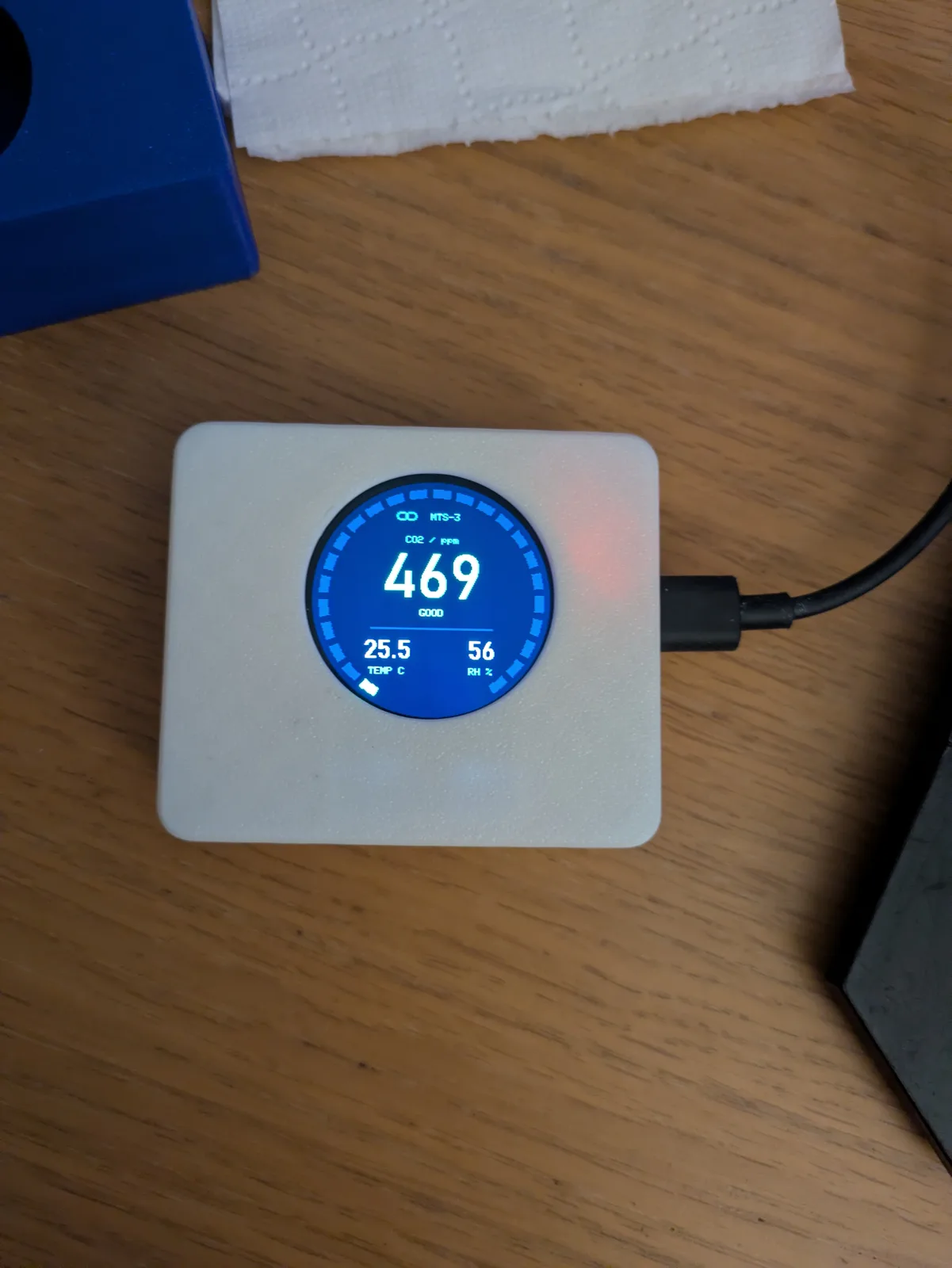
05 / White enclosure
The same compact stack, inside a rounded white enclosure. The circular display brings CO₂, temperature and humidity together on the front.
5 / 5Still experimenting: the small blower and airflow tests are another branch of the build.
This started as a way of seeing temperature and humidity around a house. It grew into a private building view where each room can show its sensor readings, history, device state, and, where it makes sense, controls.
ESP32-C3 devices publish structured messages through AWS IoT. Serverless services validate and store the readings, while a React dashboard puts them back onto the two floors of the house. The same path carries configuration in the other direction.
The first version paired an ESP32-C3 with an SHTC3 for temperature and humidity. I later added an SCD40 CO₂ sensor on the same I²C bus and carried the new reading through the firmware, device metadata, cloud services, history charts, and room view.
The deployed device reports temperature, humidity, and CO₂ using the point names and units expected by the rest of the platform. The board is still deliberately homemade: protoboard, short wiring runs, and a printed enclosure that can be opened again.

The white enclosure is the current setup. Blue prints record the earlier fit checks and blower experiments.
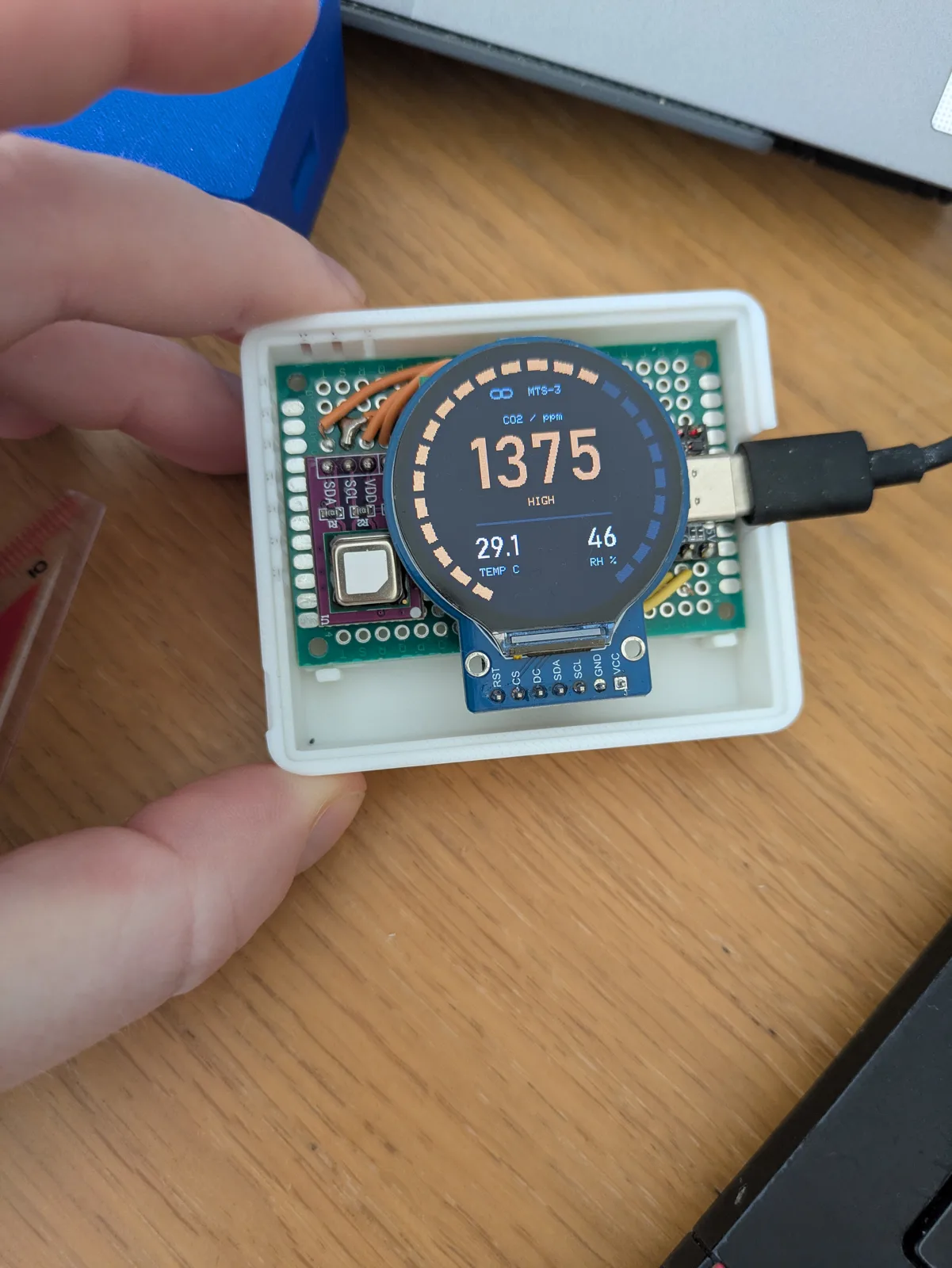
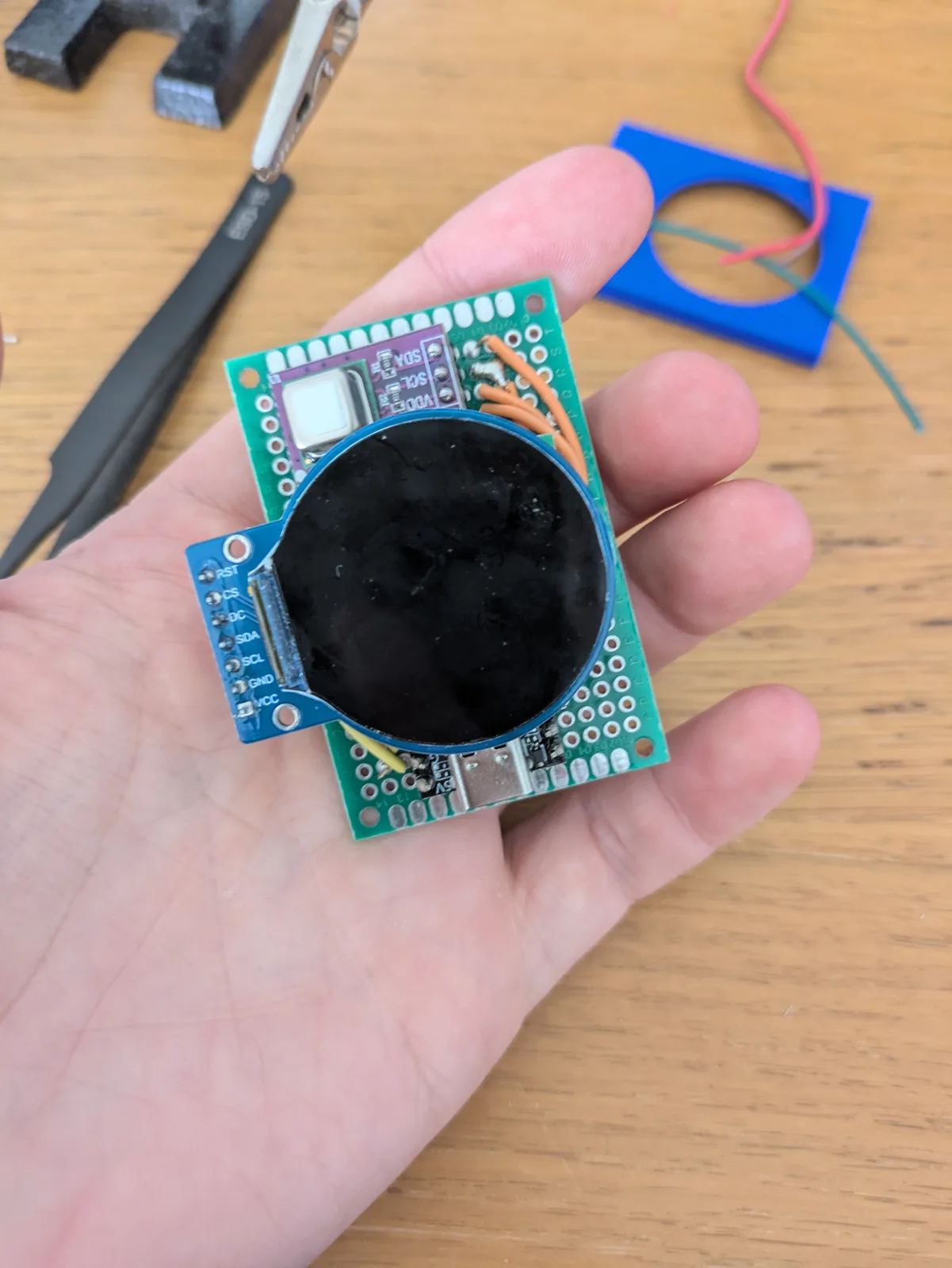
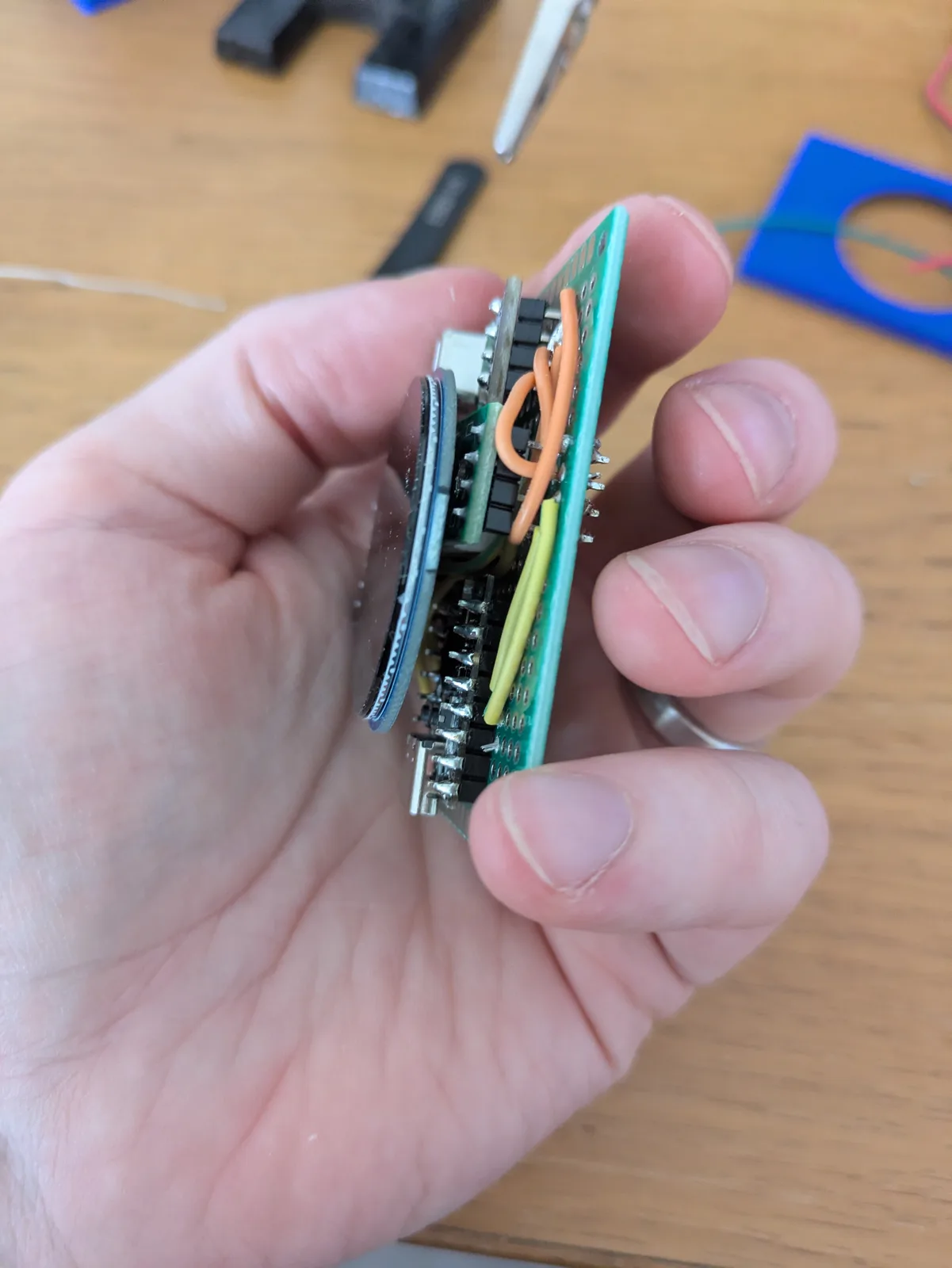
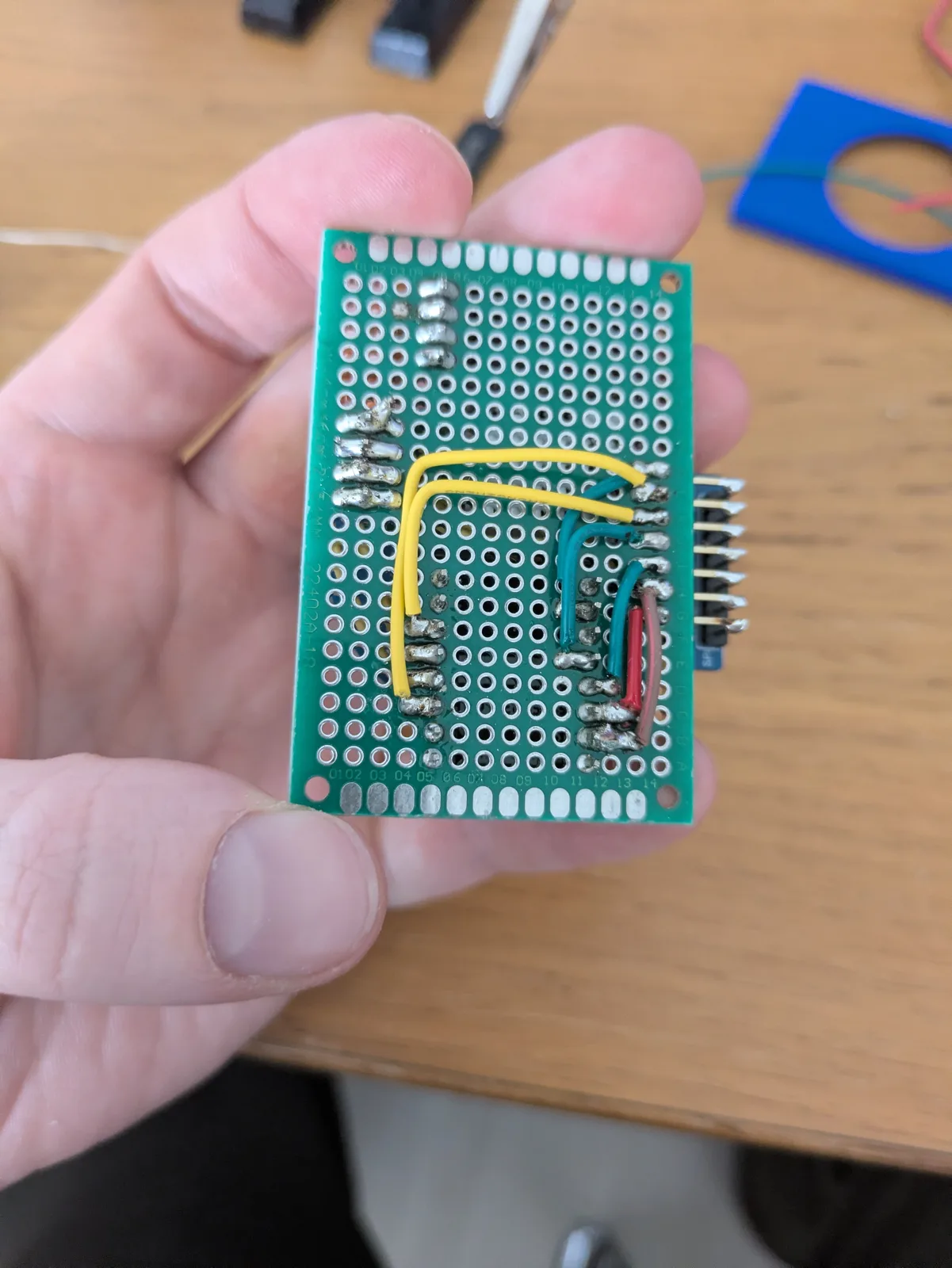
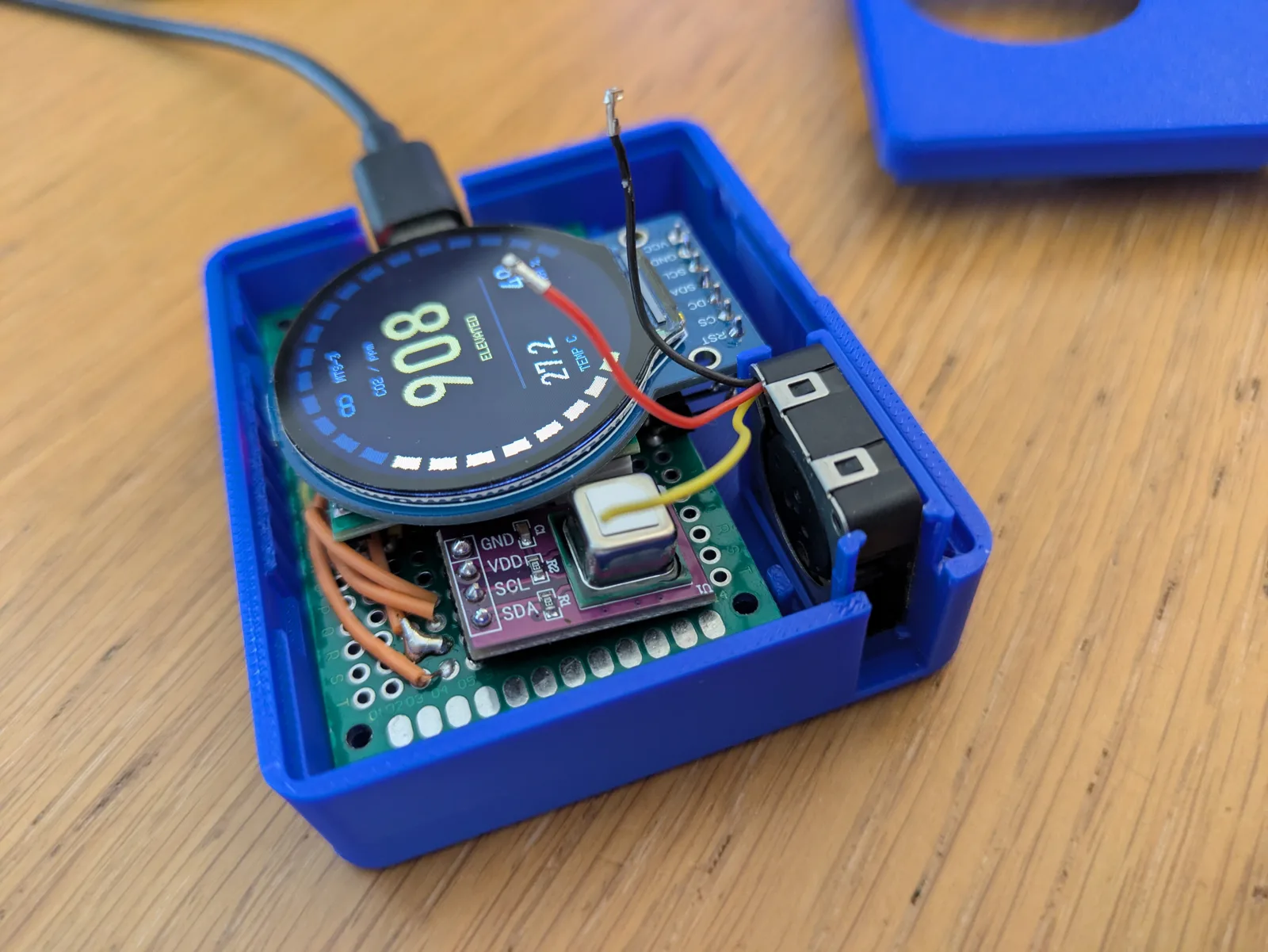
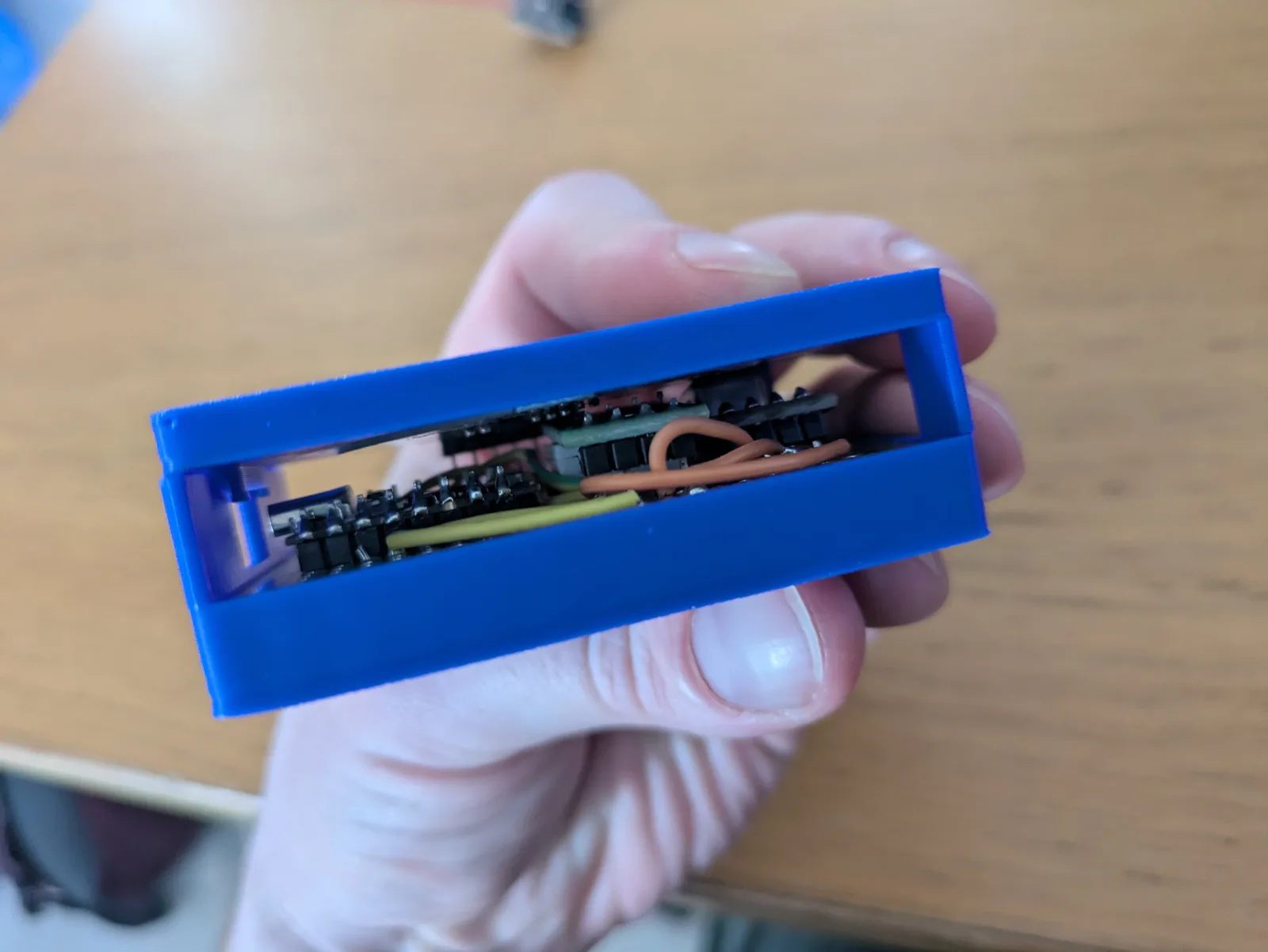
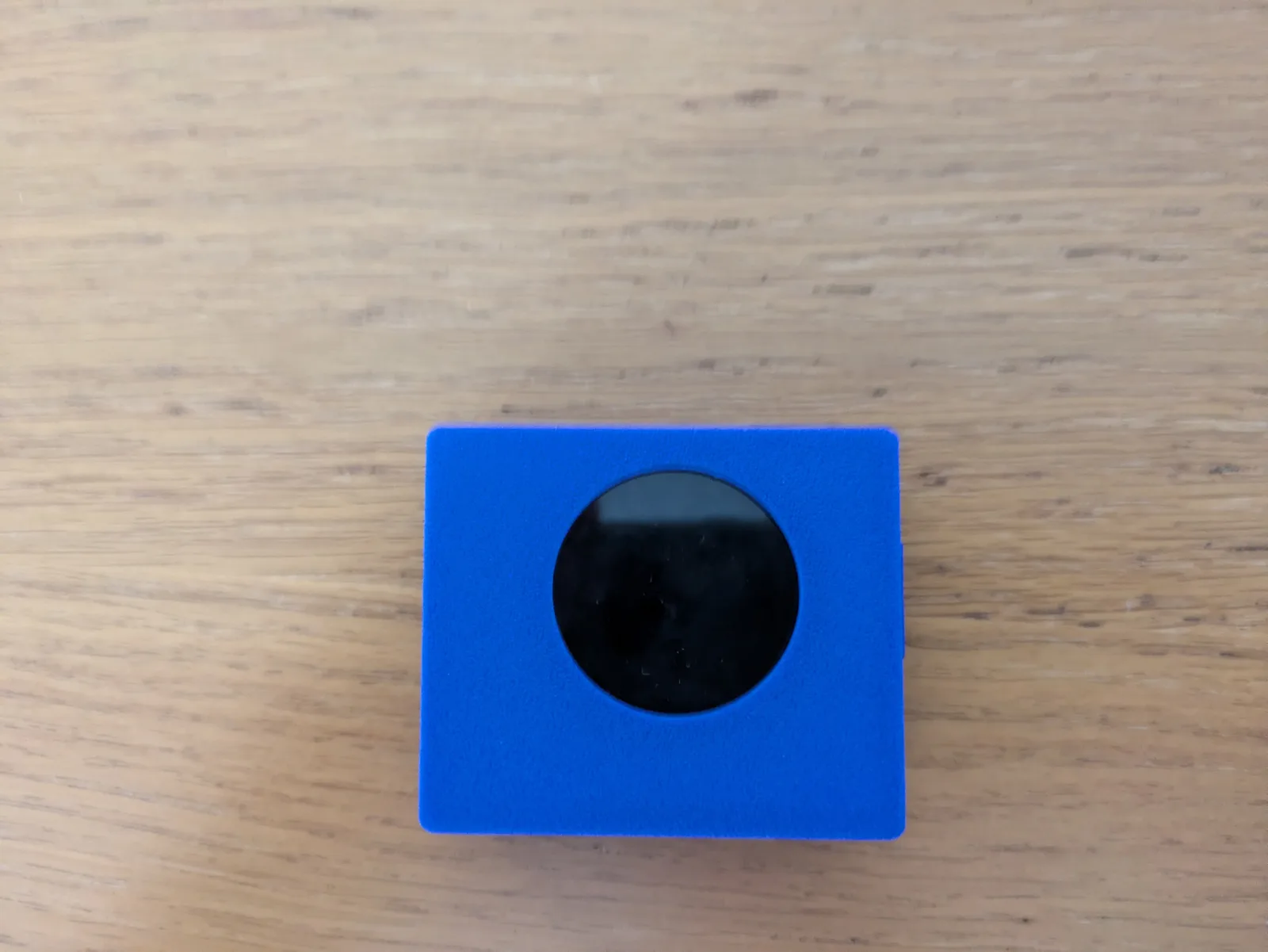
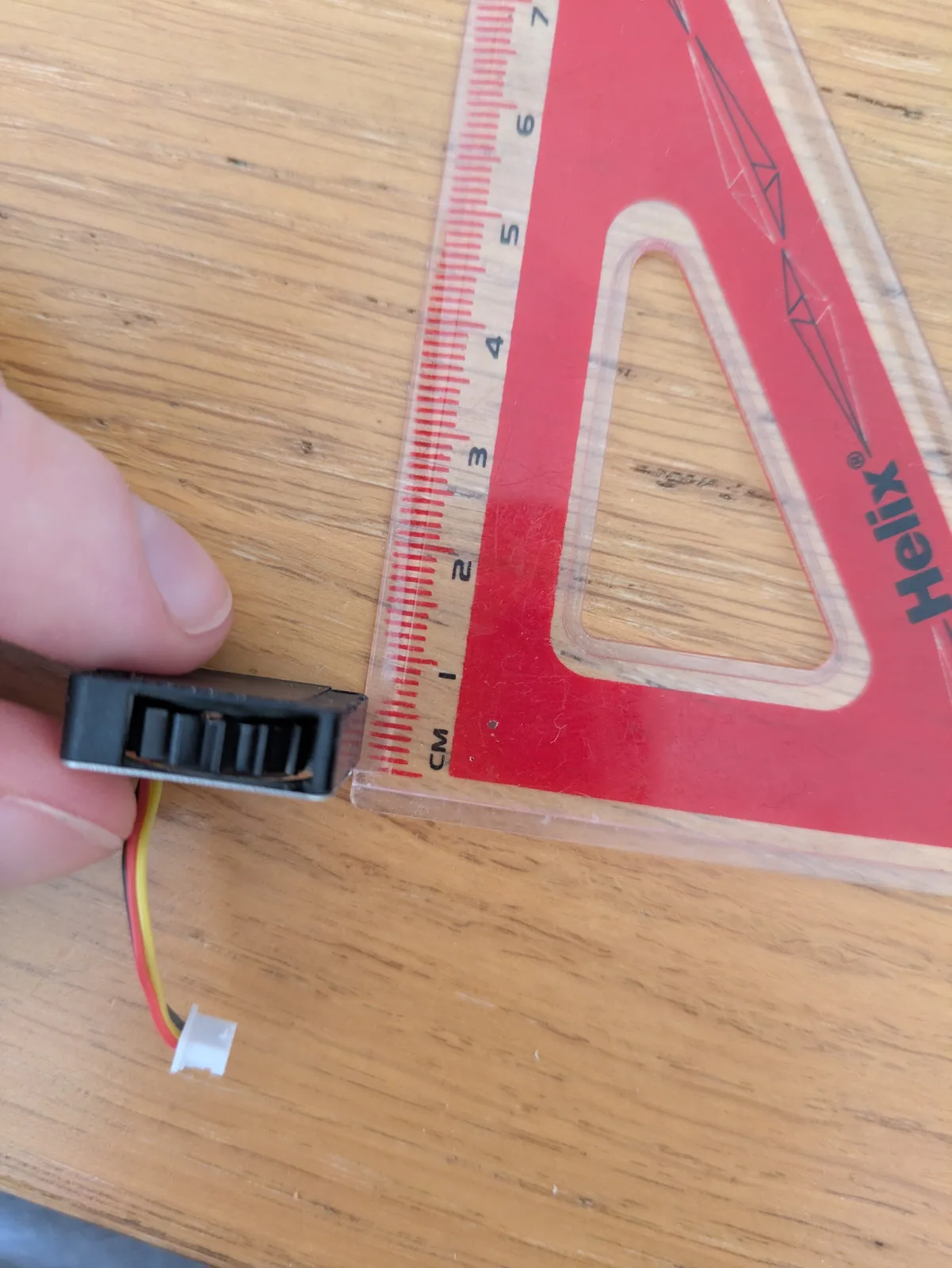
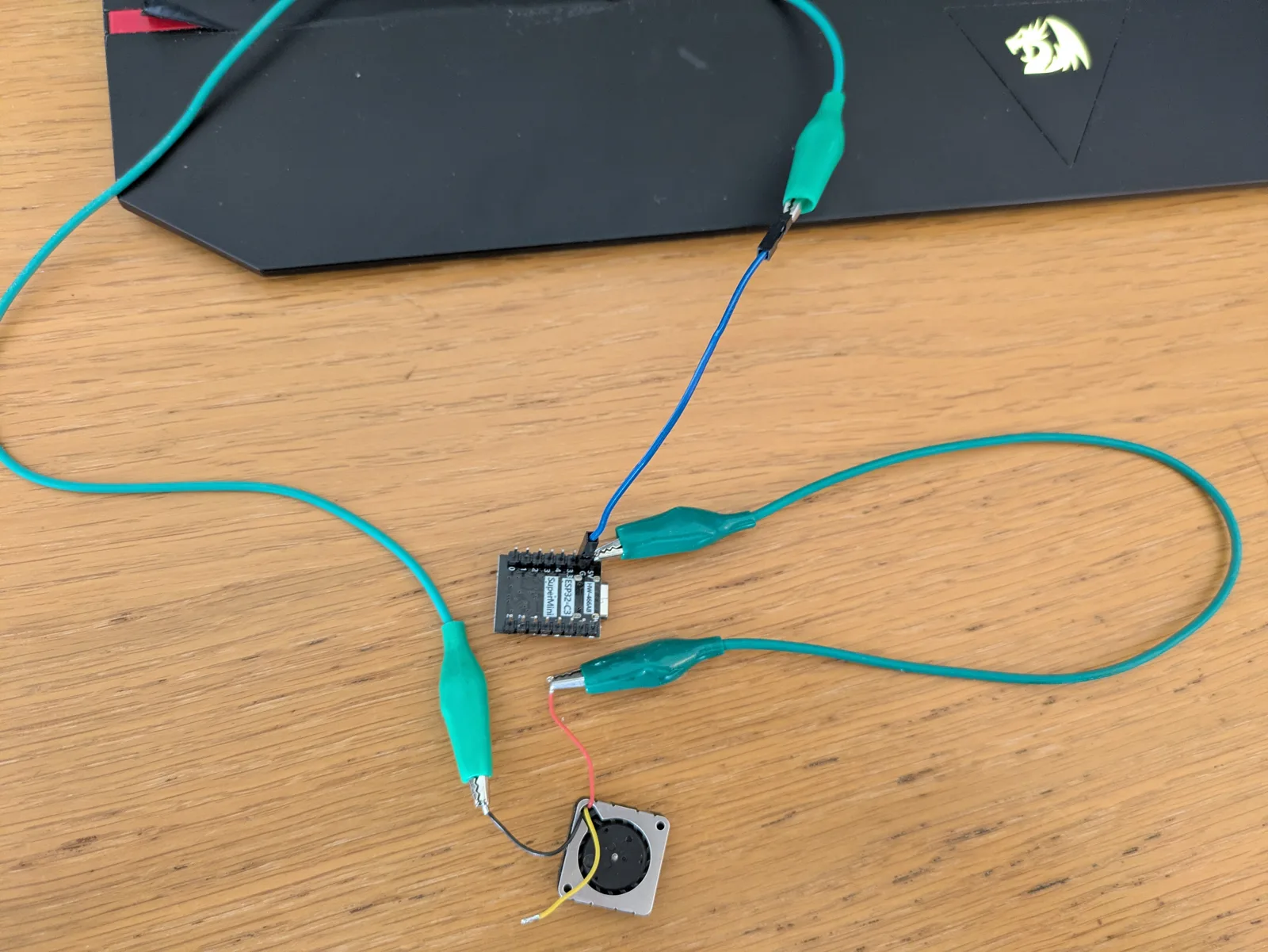
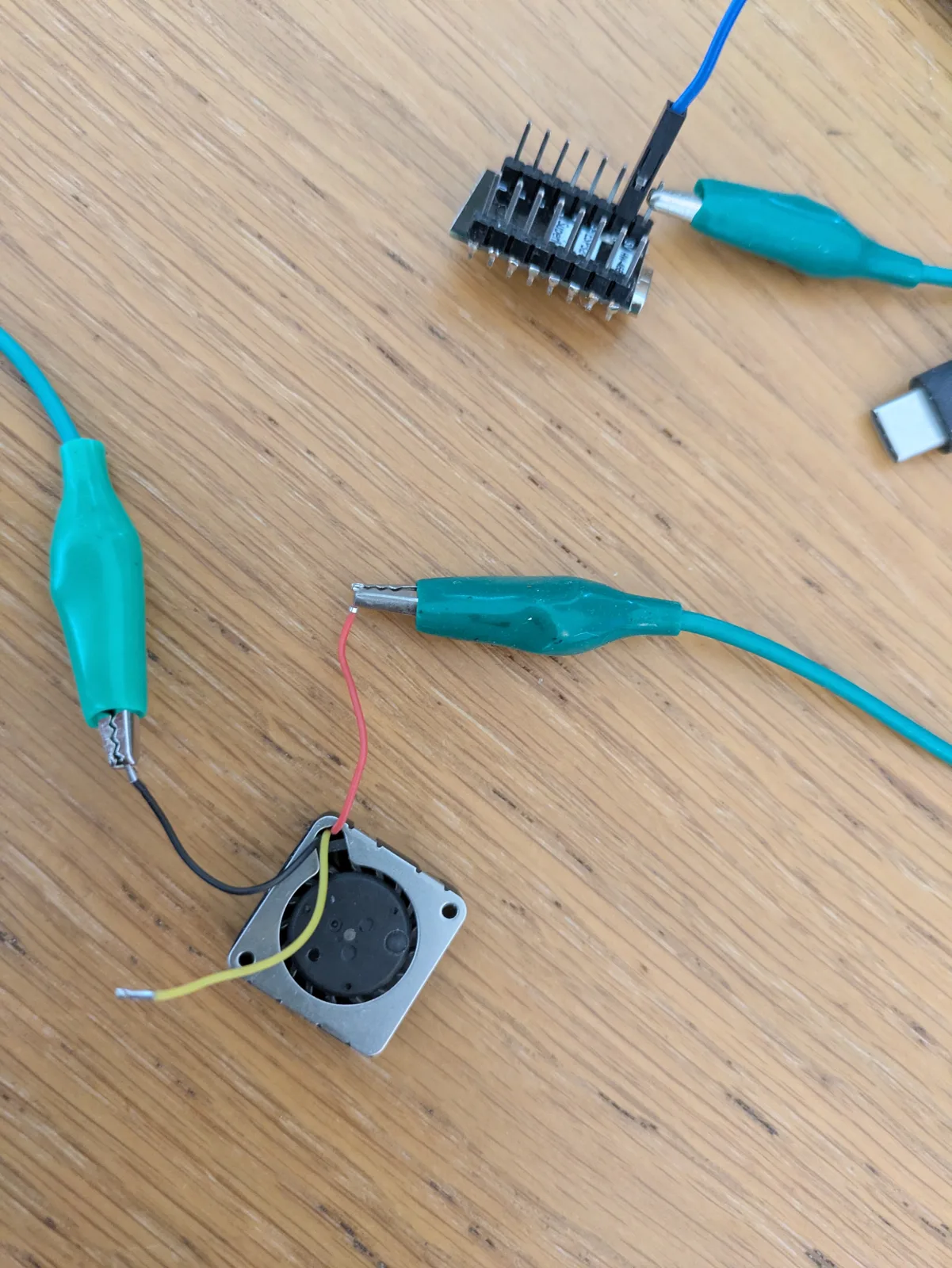
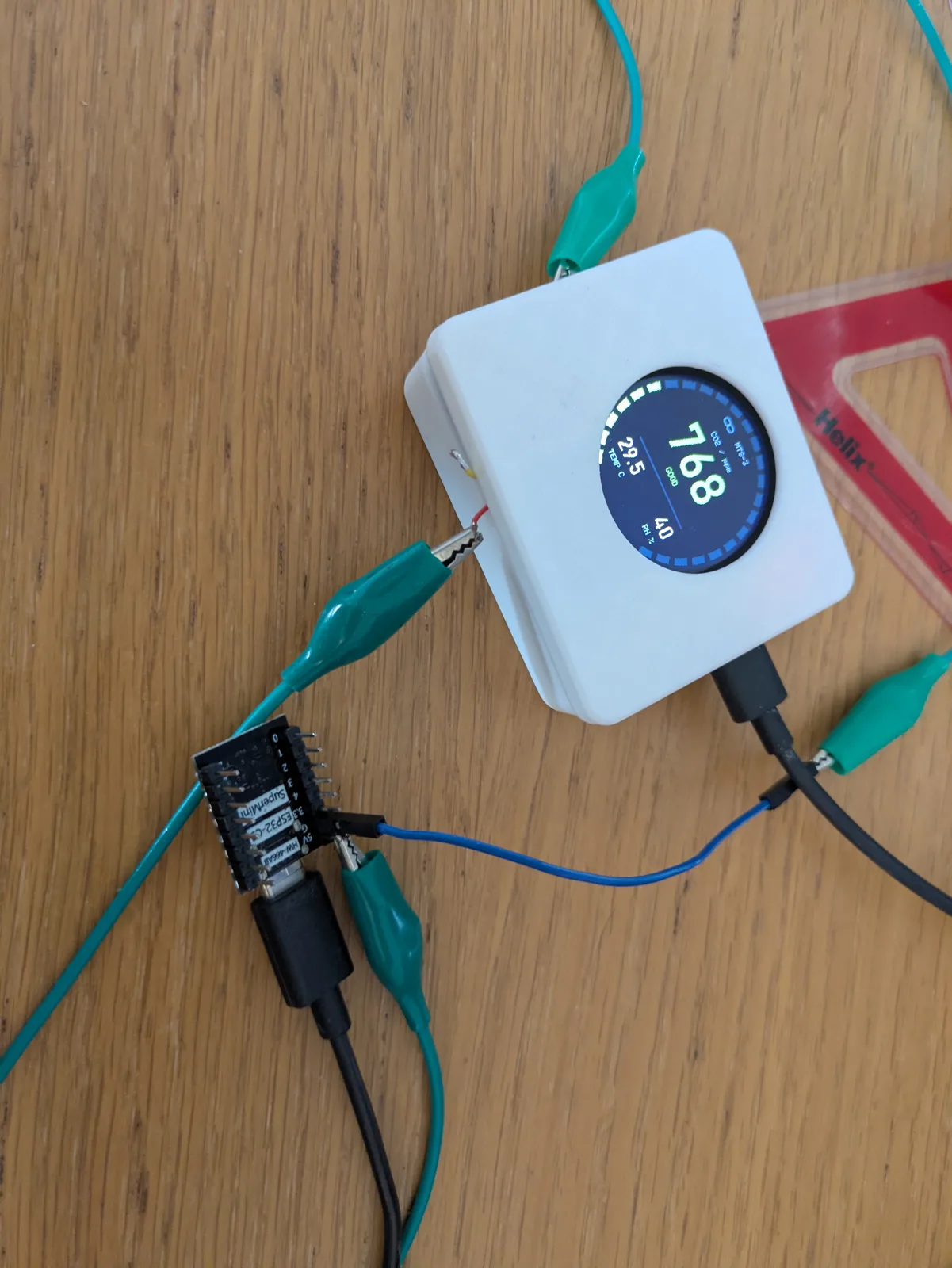
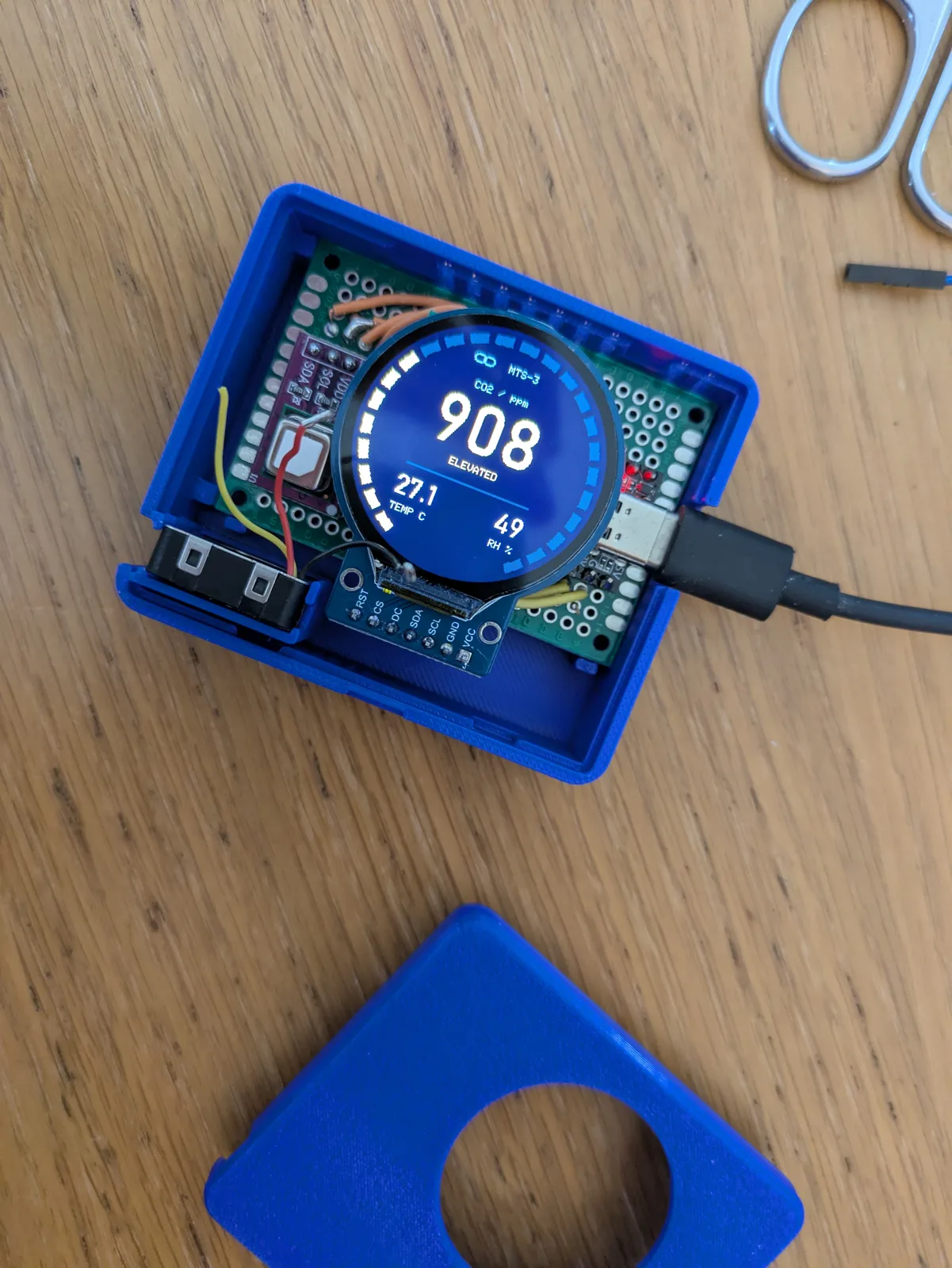
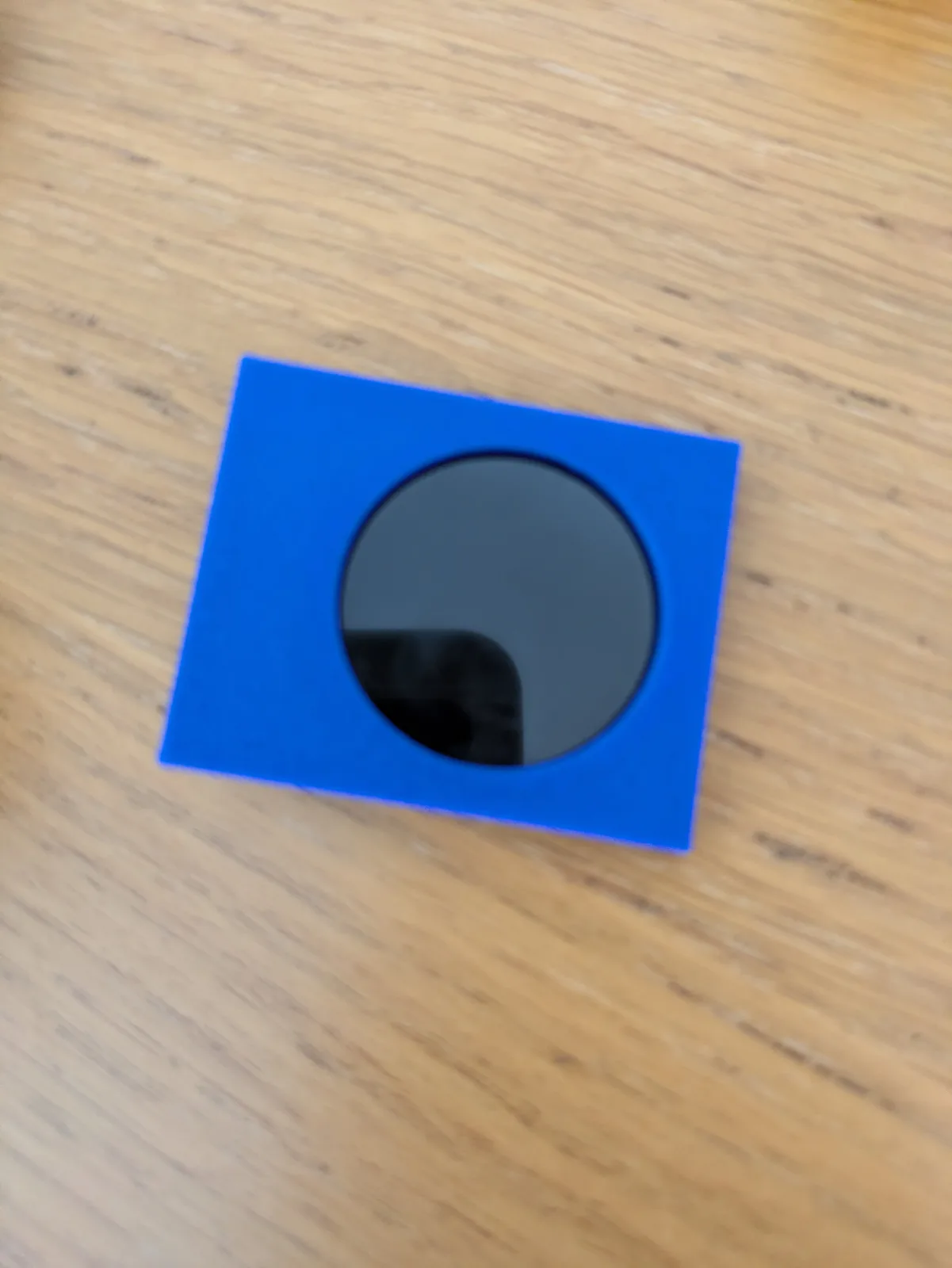
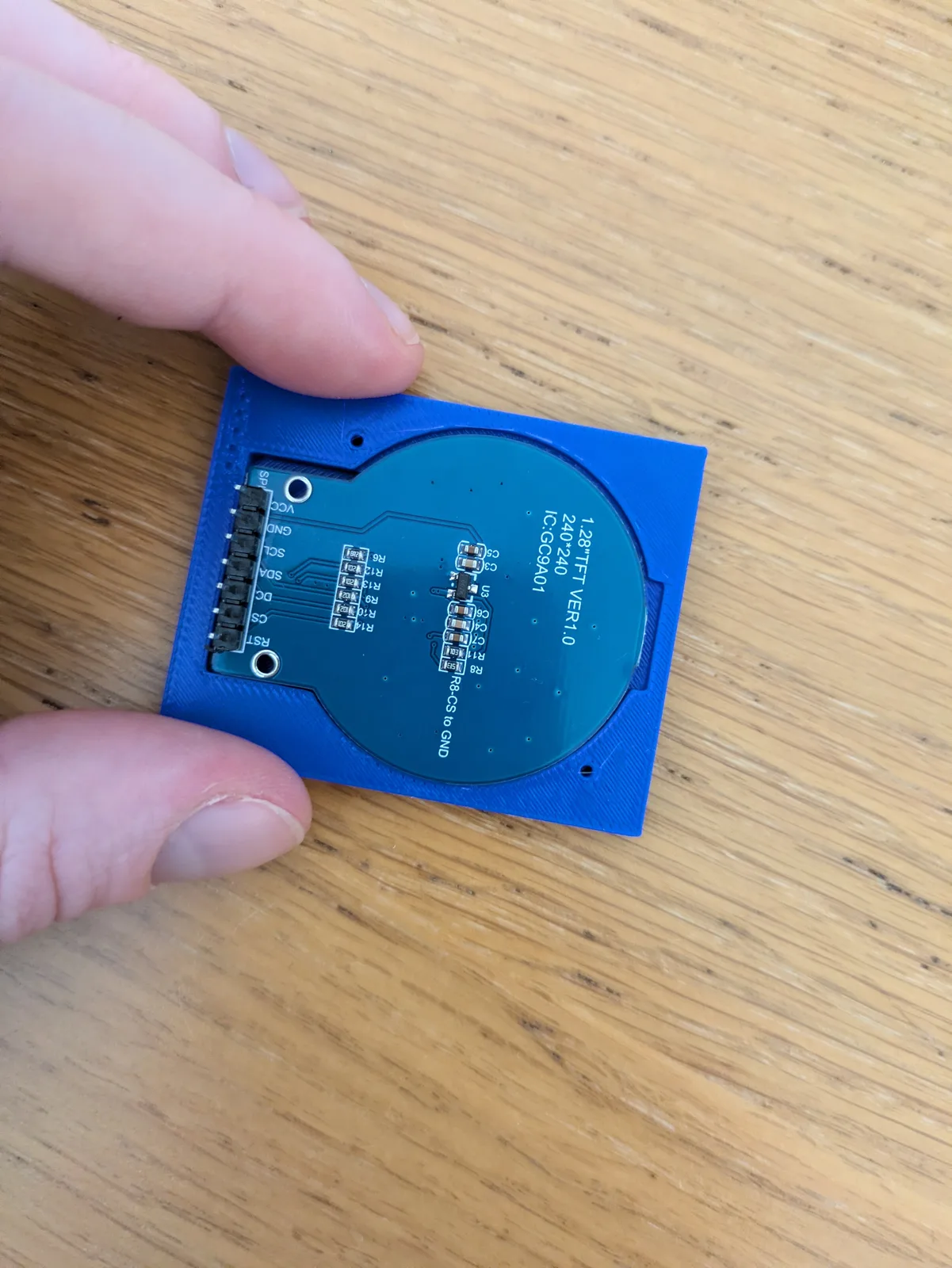
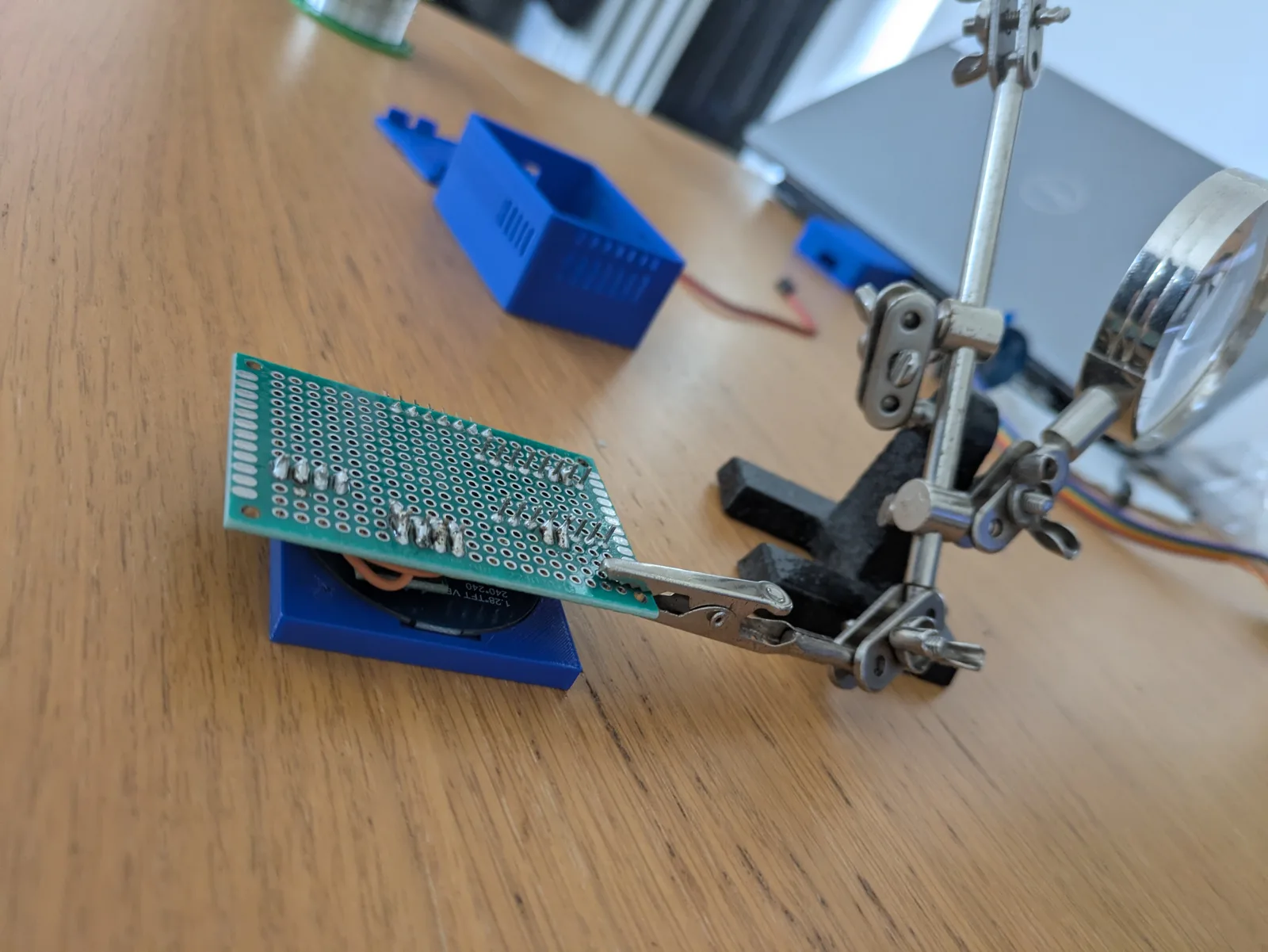
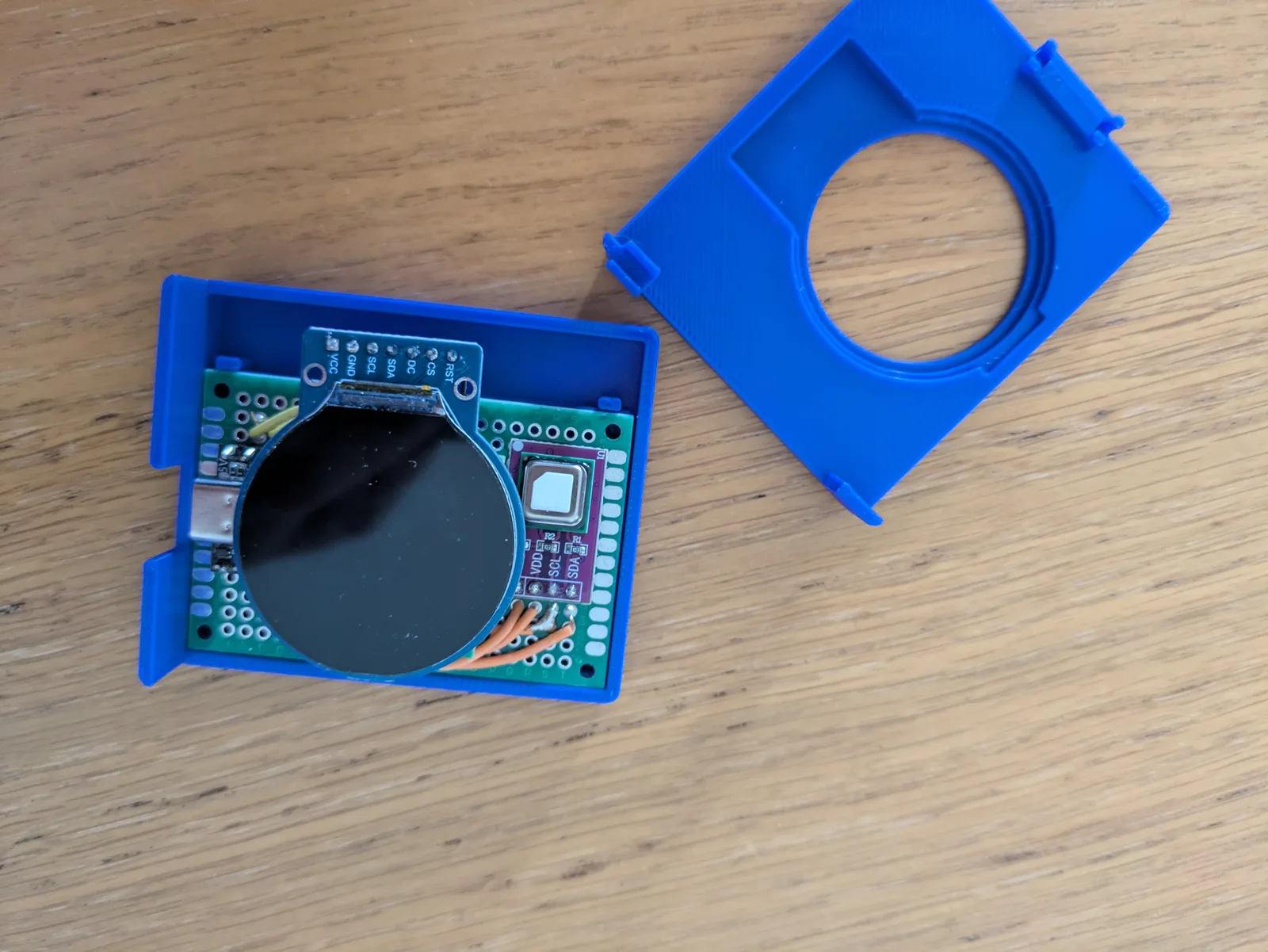
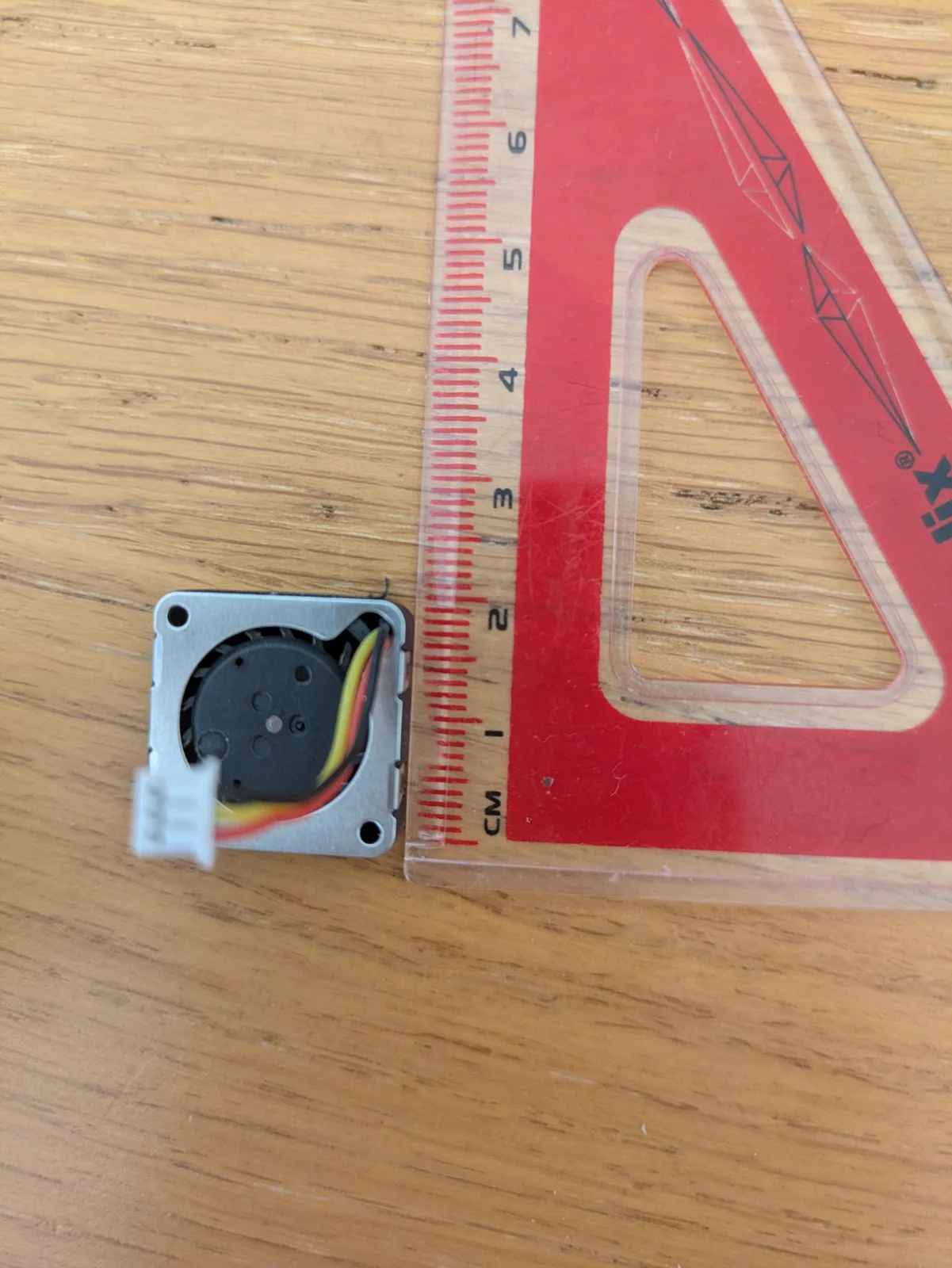
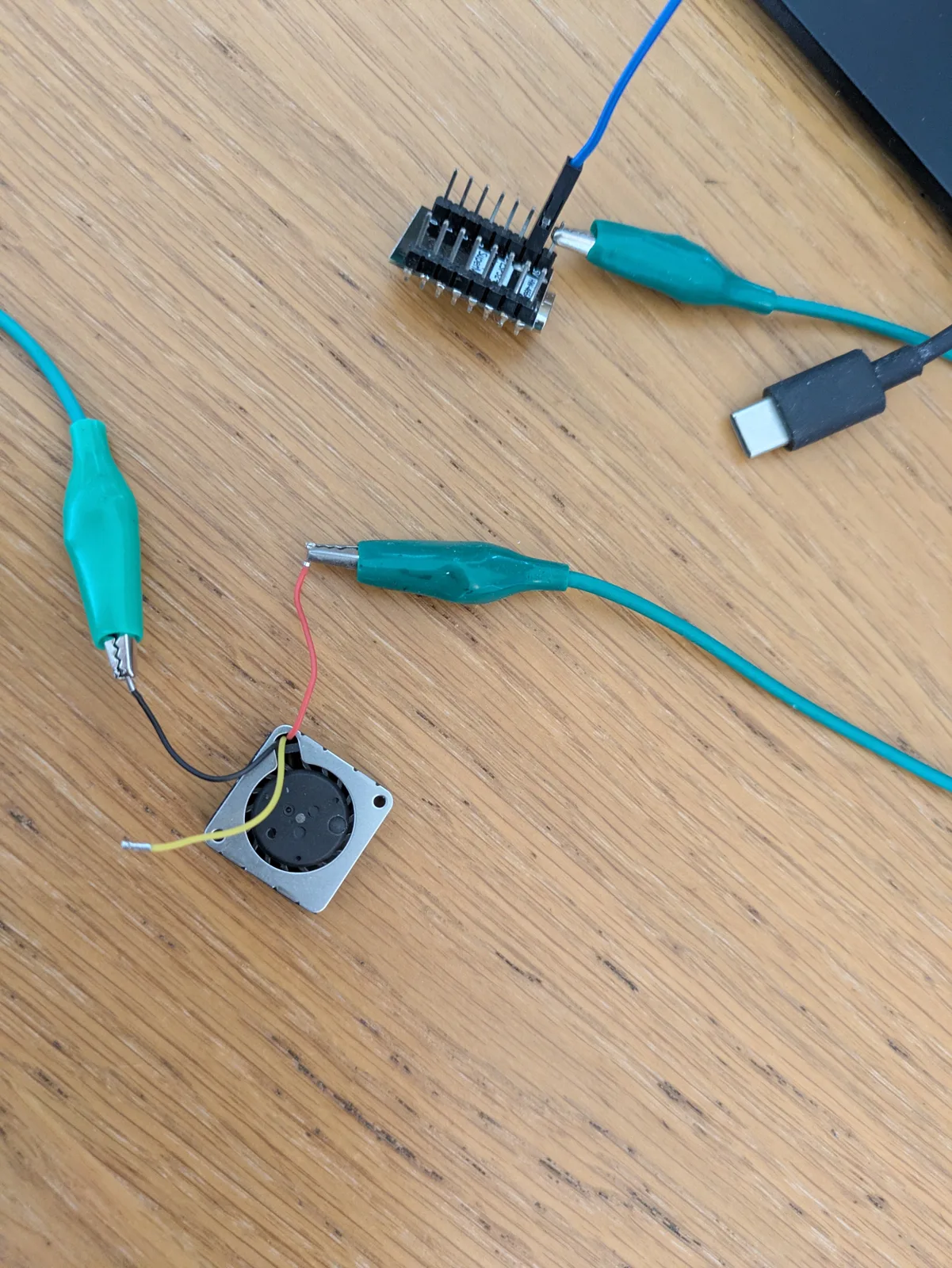
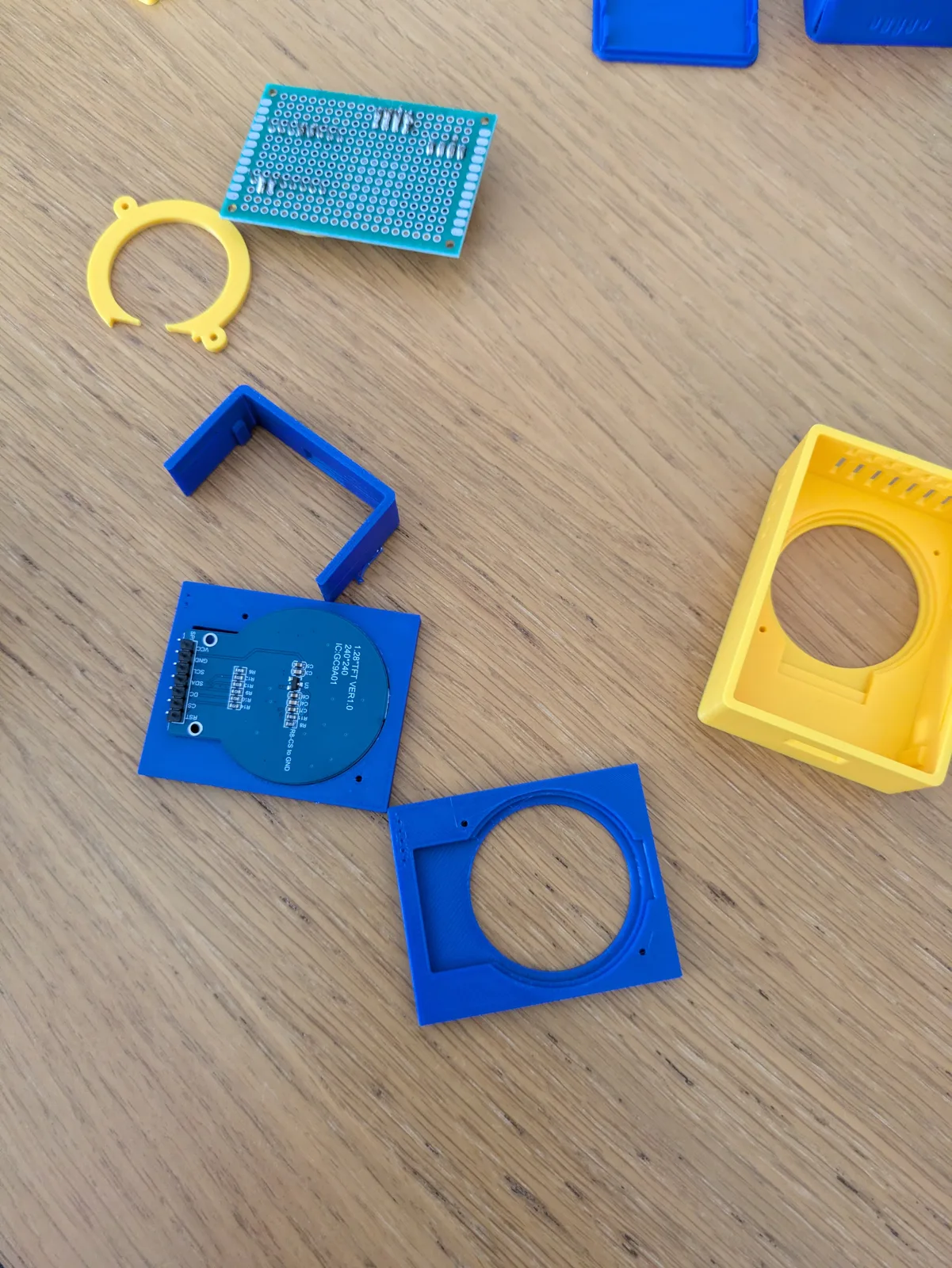
I measured the assembled board before drawing the enclosure, then printed and adjusted the shell until the sensor openings, lid, and USB-C access all worked with the hardware that was actually on the bench.

The current build has a white printed enclosure and a 1.28-inch round display showing CO₂, temperature and humidity. The screen sits above the hand-soldered perfboard, with USB-C power entering on the right. The model at the top follows this setup from the September photos; its dimensions are approximate. The enclosure page keeps the earlier Slab, Gauge and Halo studies alongside the current build.
A separate ESP32-C3 acts as a Bluetooth bridge for a Terma MOA Blue electric radiator. I used a small probe program to work out how the real controls behaved, then turned that into a bridge between cloud configuration and the radiator’s BLE characteristics.
Requested temperatures are range-checked, written to the radiator, read back, and then reported to the platform. The web interface waits for that device response before it calls a change applied. One radiator has been tested through that complete path; adding another is still future work.
The sensor, cloud, dashboard and first radiator-control paths all run on the real system. I’m still changing the hardware packaging and the day-to-day running of it.


